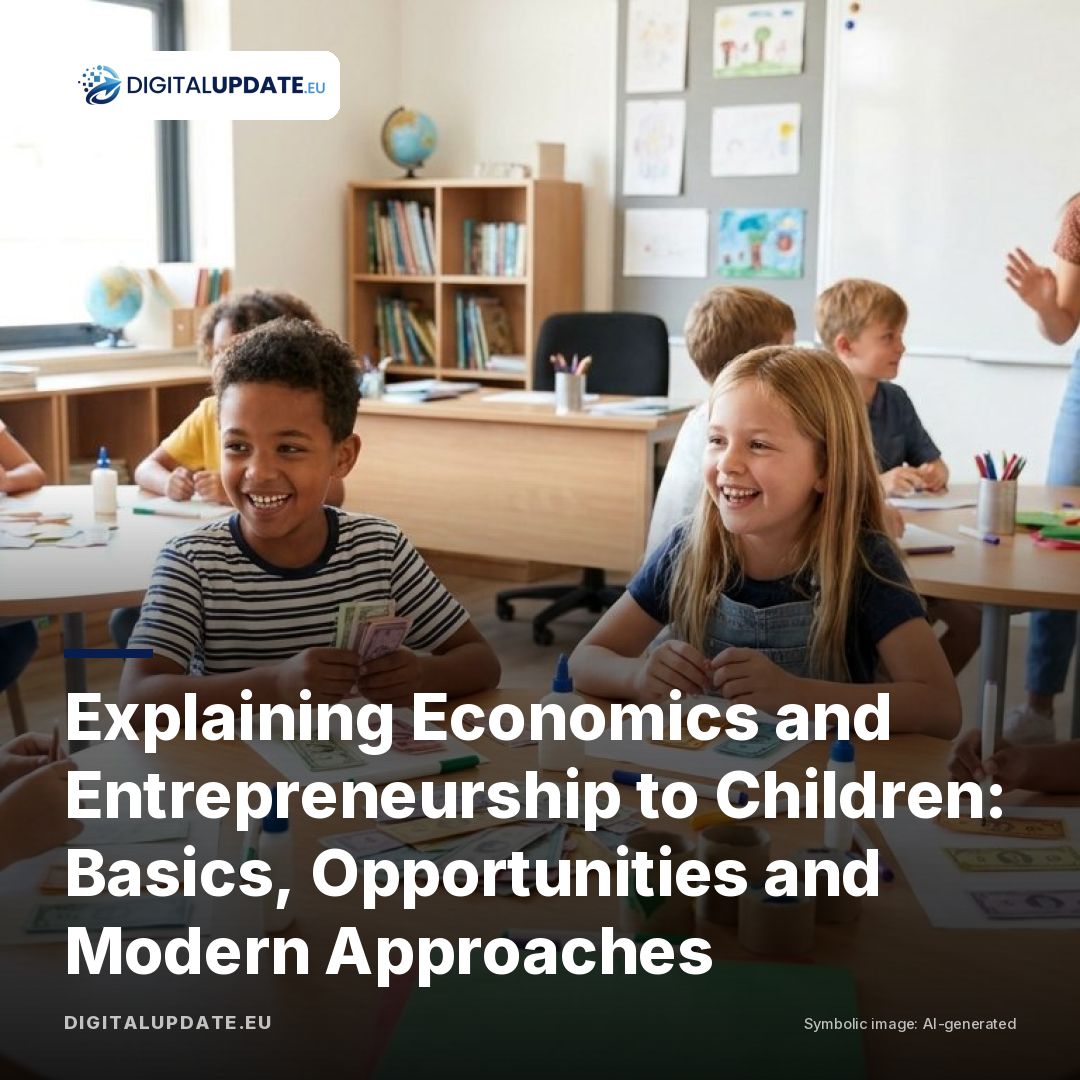
Early economic and entrepreneurial education equips children with vital skills for the future. Age-appropriate, hands-on, and digital methods help make complex topics comprehensible and encourage creativity and independent thinking from a young age.
Economics and entrepreneurship shape nearly all aspects of our modern lives, yet they often seem abstract and inaccessible to children. Even at primary school age, basic economic concepts and entrepreneurial thinking can be taught in a playful way to prepare young people early for the challenges and opportunities of the global economy. This early education not only fosters an understanding of complex connections but also boosts creativity, problem-solving skills, and initiative—competencies increasingly vital for future careers.
- Early economic literacy promotes independence and understanding of links between ideas.
- Child-friendly methods range from role-playing games to digital learning tools.
- Entrepreneurial thinking helps children devise creative solutions to real-world problems.
Why Teach Economics to Children?
Teaching children fundamental economic knowledge is increasingly in the spotlight for education experts. Children grow up in a world where economic topics such as consumption, saving, investing and entrepreneurship shape their everyday lives. Those who grasp key mechanisms early are better able to understand their own consumer world and develop an appreciation for the value of work, cooperation, and innovation.
It is also easier to prevent prejudices or fears of "business" from arising at all when talents and interests are nurtured playfully from an early age. Thanks to new media and modern teaching approaches, even abstract subjects can be made tangible and accessible.


How Children Learn Economic Thinking
Economic education doesn't begin only at secondary school—instead, it can start in kindergarten and primary school through age-appropriate topics and methods. Role-play in a supermarket, child-friendly stock market games, or starting a mini-business for a class jumble sale make economics understandable for children. Crucially, activities should be action-oriented, encouraging children to develop and try out their own ideas in a safe environment.
Even small everyday decisions—such as weighing up desires and savings when buying a toy, or planning an outing together—encourage an understanding of economic contexts. Parents and guardians play a central role by modelling economic behaviour and providing free learning opportunities, like opening children’s bank accounts.
Digital Opportunities: New Avenues for Modern Economic Education
In 2026, innovative digital tools are at the heart of child-appropriate economic education. Interactive learning apps, virtual business simulations and digital classrooms offer age-appropriate content that children can explore independently. Access to digital platforms is designed to be accessible, accommodating a range of prior knowledge. At the same time, playful knowledge transfer is encouraged by reward systems—a method that enhances motivation and sustained learning.
The integration of artificial intelligence (AI) enables individually tailored learning paths. Digital assistants can help explain economic concepts, allow children to simulate various scenarios, and provide instant feedback. Gamification principles are also widely used in learning platforms, such as stock market games or virtual start-up challenges. The development of these tools is closely guided by educators to guarantee content that is age-appropriate and trustworthy.
Read more about the role of AI in the economy and current opportunities in the article AI as a Growth Driver for the Global Economy 2026.
Entrepreneurial Thinking: Fostering Creativity and Responsibility
Entrepreneurship is about more than founding a business. It concerns the ability to spot opportunities, assess risks, and find innovative solutions. Children benefit from projects that encourage them to take initiative: whether collecting donations for the environment, independently calculating prices at a jumble sale, or developing a product together—all these foster entrepreneurial skills and enhance teamwork, negotiation skills, and a sense of responsibility.
Experiencing failure is also part of childhood learning: minor setbacks or failed business models in a safe learning space help develop resilience and a constructive approach to mistakes, all of which are essential for later challenges at work.
The Role of Parents and Schools in Teaching Economics
Parents, guardians, and schools work together to make economic thinking part of everyday life. Combining school-based activities with external projects is particularly effective. Projects such as communal saving, neighbourhood initiatives or coding workshops open up a broad range of experiences for children. Curricula are increasingly extended with modules covering financial literacy, consumer behaviour, and sustainability, delivering these topics in practical ways.
Progressing digitalisation makes it possible to provide high-quality educational resources even in rural areas, helping to reduce gaps in access to economic knowledge. Many schools cooperate with local companies or start-ups to form learning partnerships that provide insights into real economic life.
Making Concepts Clear: Explaining Terms in Practical Ways
One frequent issue when teaching economic topics is the complex terminology involved. Terms like "investment", "return" or "company profit" can be easily explained in the abstract, but it is only through vivid stories or practical exercises that their meanings really become clear. It's advisable to use age-appropriate language and relate terms to everyday situations—such as saving for a goal, the difference between gross and net, or why prices fluctuate. Our guide What Does Net Mean? offers an age-appropriate explanation of the term using daily life examples.
Common Problems in Teaching Economics to Children
There is often a lack of suitable materials or methodological support for teachers. Additionally, many parents are unsure of how to teach economic values without creating pressure to achieve or encouraging excessive consumption. Children can also quickly lose interest if topics are overly abstract or purely theoretical. The challenge is to connect economic knowledge with other school requirements such as reading, writing and maths without overwhelming students.
Current Developments in Early Economic Education
2026 is seeing a transformation through digitalisation, cross-curricular approaches and collaborative learning formats. Increasingly, schools are incorporating "basic financial education" into their curriculum and are working on joint projects with partners outside school. The combination of classroom teaching and digital tools is being intensified to meet different learning styles and ensure practical relevance. At the same time, social issues such as sustainability, responsible consumption and social innovation are becoming main focuses in age-appropriate economic education.
Conclusion: Economics for Children – The Foundation for the Future
Basic economic education and entrepreneurial thinking should be core competencies in modern school and family education. Age-appropriate, practical and digital approaches make economics and entrepreneurship understandable and exciting for children. Understanding economic relationships equips young people to develop creative solutions, take on responsibility, and play an active role in shaping their own—and society’s—future. Investing in early economic education is therefore also an investment in a responsible, innovation-driven generation. How will these approaches continue to evolve, and what role will parents, educational institutions and companies play?