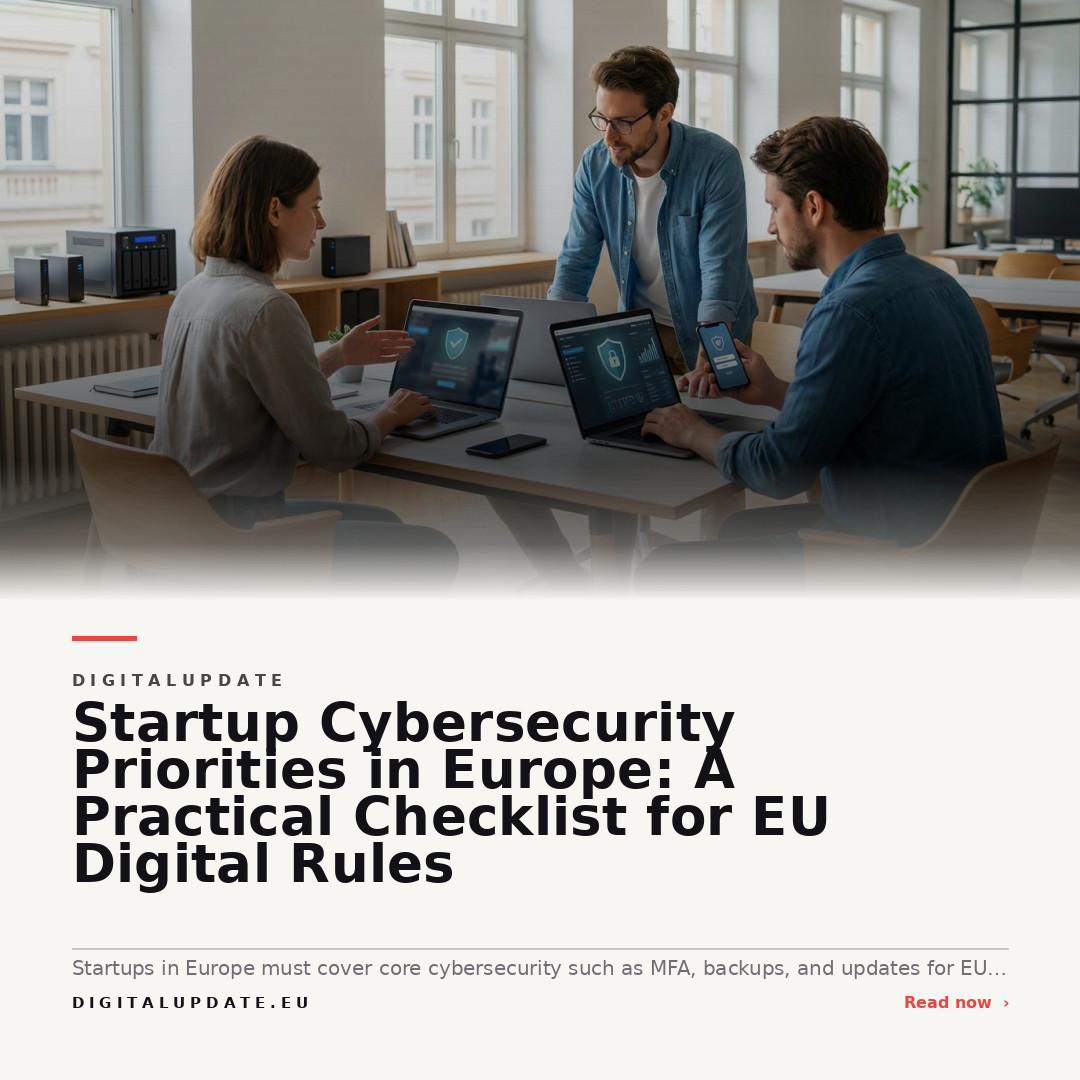
Startups in Europe should first implement multi-factor authentication, regular backups, automated updates, and strong access controls to comply with EU digital regulations such as NIS2 and the Cyber Resilience Act. Each control must be assigned to a responsible team member, tested regularly, and adjusted as the company grows and the threat landscape changes. This approach integrates regulatory readiness and practical risk reduction from the outset.
European startups must address cybersecurity not only as a technical safeguard but also as an urgent compliance obligation under evolving EU digital regulations. Under directives like NIS2, the Cyber Resilience Act (CRA), and the AI Act, startups need to show concrete cyber resilience steps from day one. This is distinct from generic small business checklists: European startups must map each foundational security control to new regulatory duties and auditable expectations, beginning with multi-factor authentication on admin and cloud accounts, least-privilege access, routine backups, software updates, and a named incident response contact. These actions, sequenced for highest risk, ensure startups meet both operational needs and strict legal requirements.
- Use MFA on admin, email, and cloud logins as a compliance and risk baseline
- Limit access rights strictly — assign and record owners and periodic reviewers
- Automate system, application, and cloud updates to close known security gaps
- Back up critical data separately, test restores, and document RPO/RTO for audits
- Train staff to spot and report phishing — an EU reporting obligation for NIS2/GDPR firms
- Document who owns each control, including backup tests and incident contacts
How Do EU Digital Rules Set Startup Security Priorities?
Unlike generic cybersecurity advice, new European rules such as NIS2, CRA, and the AI Act require specific controls, assigned roles, and documented processes for even smaller digital businesses. These regulations compel startups to demonstrate not just internal protections, but also readiness to notify customers and authorities in case of incidents. If your startup handles personal or customer data, operates digital products, or relies on SaaS suppliers, you must show you have enabled core controls and can respond swiftly to breaches or vulnerabilities. Prioritising these measures should be part of your initial technology and compliance roadmap, distinctively linking each action to the rule it helps fulfil.
How to Prioritise Cybersecurity Controls in a European Startup
Startups in Europe face both resource constraints and strict new digital compliance challenges. To prioritise, founders should identify business-critical assets—such as SaaS admin logins, customer databases, and cloud platforms—and focus controls on these first. Current NCSC and ENISA guidance emphasises preventing account takeover (by enforcing MFA), restricting access rights, automating software updates, and backing up critical data separately as initial priorities. Assign each control to a named person, schedule quarterly reviews, and document every update or test for regulatory and investor due diligence.


First 30 Days: Secure Accounts, Access, and EU Compliance Essentials
Immediately after launch, enable multi-factor authentication (MFA) for all admin, cloud, financial, and key email accounts. MFA is now a primary control under NIS2 and is crucial for compliance readiness [1]. Simultaneously, cut unused accounts, restrict admin access to the minimum number of staff needed, and ensure every user has a unique identity. Record all access rights and review at least quarterly for both operational integrity and as evidence for audits.
Protect Devices, Email and Software — Comply with CRA and NIS2
Ensure all endpoints—laptops, mobiles, servers—have current antivirus and anti-malware protection. Activate reliable email filtering to stop phishing and malware before they reach staff. Under CRA and NIS2, regular installation of software updates is now a regulated baseline: enable automated updates for all applications and operating systems, and keep a log of update status to demonstrate compliance.
Back Up Critical Data and Test Recovery — Audit for Resilience
Back up all essential business data at least daily, and store backups separately from live systems—either on-site in a secure, access-controlled medium or via a trusted, compliant cloud backup. NCSC and ENISA warn that simply syncing to the cloud is not enough: backups must be isolated and regularly tested for successful recovery [1]. Document your backup and restore processes, noting who owns the restore-check task and the dates completed. These records are often required in NIS2 data resilience checks.
Train Staff and Reduce Phishing Risk
Human error, especially via phishing, remains the top cause of cybersecurity breaches in European SMEs. Early, repeatable staff training is legally mandated for NIS2/GDPR-affected startups and highly recommended for all. Teach staff to recognise suspicious emails, use strong passwords, and report any incident immediately. Adopt brief, scenario-based micro-training quarterly, and keep a log of training completion for compliance files.
Prepare a Simple Incident Response Plan — Fulfil EU Notifications
Your incident response plan is both a risk management tool and a compliance requirement under NIS2, CRA, and GDPR. This plan should name escalation contacts, clarify roles for detection, containment, and communication, and include legal and IT contacts for external notification. Rehearse the plan annually, updating procedures after any real incident or regulatory change, and ensure all stakeholders can access it even if systems are down. Routine drills and documentation reduce the response time and regulatory penalties should an incident occur.
Review Suppliers, SaaS, and Personal Data Risks for Regulatory Fit
Startups typically depend on external SaaS tools, cloud providers, and service partners—each a point of regulatory risk. Identify which suppliers process personal or business-critical data and review their capability to notify you quickly in case of a breach. Add security clauses and incident notification deadlines to all contracts. Map out personal data flows to satisfy GDPR recording and assign a contact point for data protection tasks. This proactive review closes gaps in both operational safeguards and compliance exposure.
Assign Owners and Track Progress — Demonstrate Continual Improvement
No startup can eliminate risk—but assigning ownership for each control (e.g., MFA setup, backup monitoring, incident response) ensures nothing is left to chance. Use a lightweight register to log the responsible person, review dates, test results, and any supplier changes [1]. Quarterly updates keep your security posture aligned with both business growth and regulatory requirements—allowing the startup to demonstrate readiness for audits, partnerships, and funding rounds.
Typical Problems
Many European startups mistakenly assume that using major SaaS or cloud solutions automatically provides regulatory compliance and cybersecurity. In reality, foundational tasks like setting up MFA on admin accounts, regularly testing backups, and reviewing supplier agreements are often overlooked due to time and skill shortages. Being explicit about ownership and documentation at the outset solves these hidden gaps and avoids compliance failures.
Recent Developments
European authorities such as NCSC and ENISA have issued new guidance for SMEs and startups, identifying ransomware and supply chain weaknesses as urgent risks. As a result, EU digital rules now demand actionable proof of controls like MFA, tested backups, and rapid incident notification. Startups who embed these priorities early will gain not only legal compliance but also a strong negotiating position with partners, investors, and larger customers who increasingly audit digital maturity.
Conclusion
For European startups, integrating cybersecurity with regulatory compliance is essential, not optional. By prioritising multi-factor authentication, tested backups, and automated updates—and maintaining clear documentation and assigned responsibilities—founders build a business-ready, audit-proof core that satisfies EU mandates and real-world security requirements. Proactive ownership and regular reviews make cybersecurity a living process, preparing startups for opportunity, scrutiny, and resilience in an evolving digital landscape.
Quellen
[1] Cyber Security Guide for Small Businesses (National Cyber Security Centre)