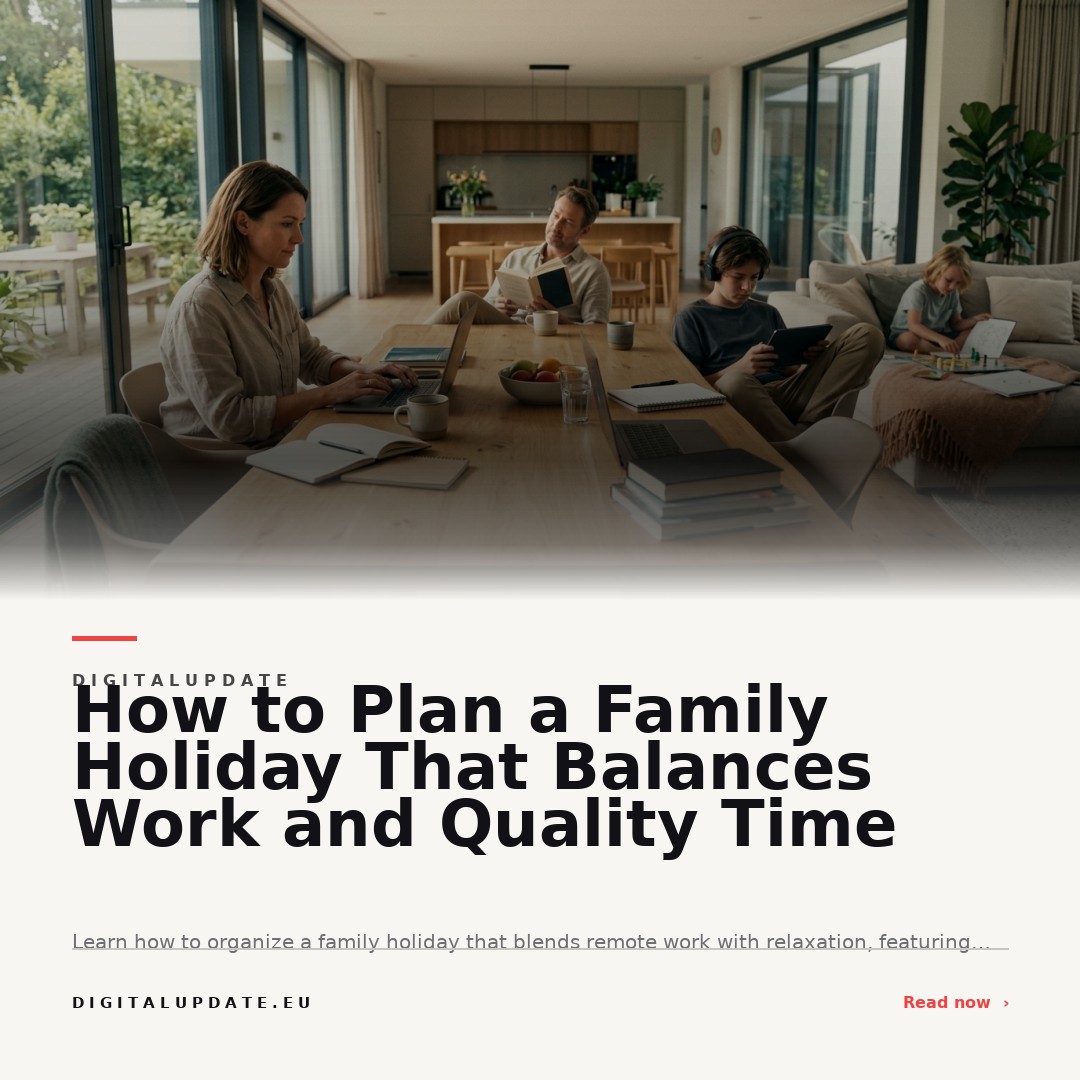
To plan a family holiday that balances work and quality time, set clear boundaries with both family and colleagues, choose destinations with reliable internet and family amenities, and schedule dedicated periods for both work and uninterrupted family time. Leveraging digital tools and communicating expectations help ensure both productivity and memorable bonding.
Successfully planning a family holiday that balances remote work with genuine quality time is entirely possible in today's digital age. By setting clear boundaries, choosing the right destination, and communicating effectively with both family and colleagues, business professionals can achieve both productivity and meaningful bonding during their holiday.
- Communicate your availability and boundaries with family and work before your trip.
- Choose destinations with reliable internet and suitable workspaces.
- Block out non-negotiable family time as you would any meeting.
What Does It Mean to Balance Remote Work and Family on Holiday?
Balancing remote work and family time on holiday means orchestrating a trip where business professionals can fulfill their work responsibilities without sacrificing quality moments with loved ones. This approach has gained enormous traction as remote work has become mainstream, especially since the normalization of the 'workcation'—a blend of productive work time and relaxation with family, made possible by flexible schedules and digital tools. The essence is in structuring days to protect family bonding while ensuring work tasks are met.
Why Planning Is Crucial for Work-Family Balance During Holidays
Intentional planning is the linchpin of any successful family work holiday. Without a concrete schedule and ground rules, work can easily overtake personal time, diluting the intended value of a break with loved ones. Setting expectations with both your team and family members about your availability and non-negotiable times prevents misunderstandings and ensures all parties' needs are considered. Professionals are advised to use digital calendars and shared planning tools so everyone can visualize family outings and work blocks in advance [1].


Choosing the Right Destination and Accommodation
Destination and lodging choices can make or break a work-friendly family trip. Prioritize places with strong and reliable internet, designated workspaces, and kid-friendly amenities like entertainment or supervised activities. These factors help maintain professional productivity while giving family members enriching ways to spend their own time. Increasingly, resorts, hotels, and short-term rentals are catering to these needs, reflecting a shift in business travel trends toward 'workcation' experiences [2][3]. Read our guide to workations in the Alps for location inspiration.
Establishing Clear Communication and Boundaries
Open communication forms the cornerstone of a harmonious work-family holiday. Before traveling, discuss boundaries and expectations with your family—clarify times when you must focus on work and when you are fully available. Similarly, inform your work team of your modified availability, using email autoresponders, shared calendars, or status updates to reinforce these boundaries. This prevents the encroachment of work into dedicated family time and reassures clients and colleagues alike [1][2].
Time Management Strategies for Dual Commitments
Managing two crucial priorities calls for firm scheduling. Business professionals should set and communicate fixed work hours each day, then block off quality time for family as stringently as they would for key meetings [3][1]. Digital collaboration and asynchronous tools empower productivity without being tied to a 9-to-5 schedule. Apps that coordinate calendars or automate tasks can further free up attention for family, enabling more present and engaged holiday experiences.
Leveraging Digital Tools for Seamless Work Integration
The success of a blended work-holiday depends on digital infrastructure. Using cloud platforms, messaging apps, and asynchronous work tools allows professionals to maintain work progress from anywhere without constant live meetings. Families benefit when the professional can check in efficiently and return focus to holiday activities. Collaboration platforms ensure essential documents and communications are accessible regardless of time zone or location [3].
Designing a Family-Friendly Daily Routine
Routine matters just as much as technology. Mornings might be reserved for focused work, while afternoons and evenings can be dedicated to exploring together or enjoying downtime. Involving family members in planning daily activities and scheduling ensures collective buy-in and fewer conflicts over priorities. This approach also introduces children to respectful boundaries around work needs, fostering understanding and collaboration in the household.
Maintaining Flexibility Amid Unplanned Challenges
No trip unfolds perfectly—unexpected issues such as technical problems or schedule changes can arise. The best-laid plans incorporate enough flexibility to adapt. Have backup plans for internet outages, alternative workspaces, and activities that can shift as needed. Emphasize with your family that some days may require more work, but make up for it with dedicated off-hours later in the trip. Problem-solving together can become part of the bonding experience.
Typical Problems When Combining Work and Family Holidays
Business professionals often encounter difficulties such as interrupted work due to unreliable Wi-Fi, insufficient workspace, or work responsibilities spilling into family activities. Without clear boundaries, the value of the holiday diminishes, often leaving both family and work unsatisfied [1][2]. Thoughtful pre-trip planning, technology checks, and honest dialogue can prevent these issues from arising.
Recent Trends: The Rise of the Family Workcation
Recent years have seen a surge in families selecting destinations and accommodations designed for remote work and digital nomadism [3]. The concept of a family workcation is now a well-established trend, with travel providers offering tailored packages that include high-speed internet, business centers, and extensive children's programming. This evolving market supports the blending of business travel and family life, making such holidays more accessible and enjoyable than ever before.
How to Keep Everyone Happy: Practical Advice for Lasting Memories
At the heart of the matter is the importance of making time for meaningful moments. Prioritize activities that engage the whole family and make the most of undistracted hours together. Consider rotating responsibilities, letting older children have a say in planning, and embracing a spirit of adventure—even in everyday activities like shared meals or evening walks. Ultimately, the goal is to return home with professional tasks managed and cherished new family memories created.
Conclusion: Achieving the Ideal Balance
With a proactive approach, the dream of a family holiday that successfully balances remote work and quality time is entirely achievable. By defining expectations, leveraging technology, and emphasizing both flexibility and communication, business professionals can fulfill their career obligations while truly enjoying family togetherness. The future of travel, and work-life integration, is evolving—embrace the possibilities for your next holiday.
Sources
[1] How to Balance Work and Family on Vacation: 8 Tips (NerdWallet, 2022-07-12)
[2] How to Work Remotely During a Family Vacation (CNBC, 2022-07-30)
[3] How to Take a Workcation (Harvard Business Review, 2023-05-10)